
Moving-pad technique
How to time a second throw at a moving lily pad
Time the second throw against a position you can see. Counting seconds is less useful than repeating the same prepared start and landmark.
The short answer
Prepare the two launch positions first. Launch once, watch the moving object reach the board’s cue, then make the second throw. On a miss, undo that throw and change its timing while keeping the setup fixed.
The pictured examples come from launch demonstrations, not an October 15 playthrough. Match the islands and prepared objects before using an exact route; updated checkpoints or layout details may differ.
Prepare before setting the water in motion
Identify which stone starts the motion and which redirects it. Put both in their required rows or columns and leave the correct sailor ready to push. If you are still moving a launch stone after the first throw, you have changed a timing problem into a setup race.
The orb-side board uses two stones to send the upper pad left and then turn it down. If its staging stones are missing, resolve the treasure-side transfer first.
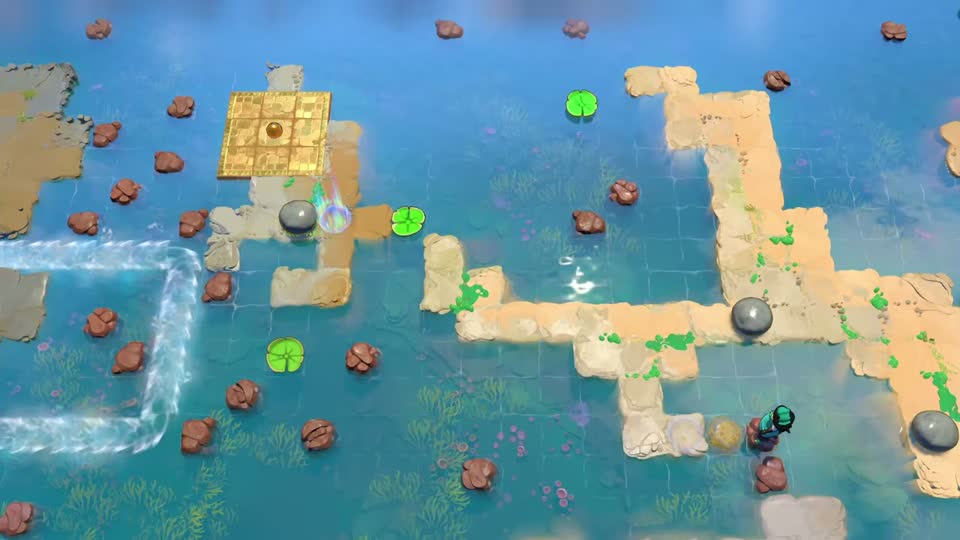
Example 1: use distance travelled, not seconds
In the launch demonstration of the orb-side board, send the first stone left. When the upper pad has travelled three grid spaces, throw the second stone left. The second impact turns the pad down towards the checkpoint-side pad.
Use the current slow-time action to watch that distance. If it carries straight on to the west, the second impact did not create the required turn. If the present layout differs, compare the board directory before using the recorded three-space cue.
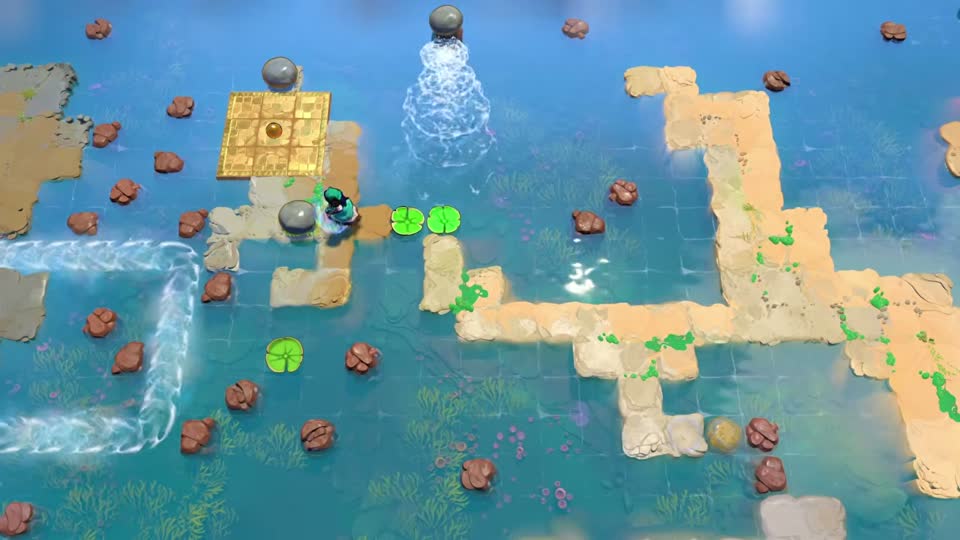
Example 2: wait for the foliage landmark
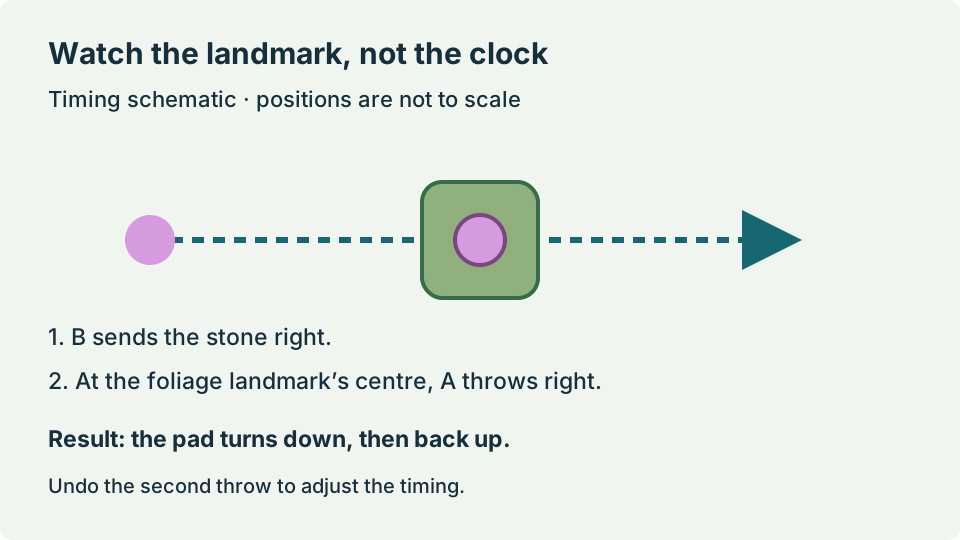
In Level 2’s foliage-cue board, A is the original sailor and B the companion. After both lanes are prepared, B throws the bottom stone right. A throws right as B’s moving stone reaches the centre of the foliage-covered stone.
The cue is the moving stone passing the fixed foliage landmark, not a guessed delay after pressing a button. Watch the first pad turn down and then back up. The diagram below explains that relationship; it is not a new game screenshot or an updated map.
Retry one variable at a time
- Undo to before the second throw.
- Confirm the initial launch and both throwing positions still match.
- Use the same visible cue, making the second throw slightly earlier or later.
- Check the pad’s direction and destination before committing to the crossing.
If the stone lands differently on the moving object, do not assume it is only your timing. October 12 fixed a stone-landing problem on fast-moving objects. If loading or the checkpoint resume differs from the pictured setup, use the recovery choices if you cannot reproduce a consistent starting state.
Check your result
The pad makes the intended change of direction and reaches a usable crossing or ride. A stone touching a pad is not enough if the pad continues into the wrong lane.
Sources and version details
Follow the linked demonstrations for the complete pictured routes.